Wine tourism in the Canary Islands has left behind its initial stage to reach a key moment of maturity. It is no longer just about visiting wineries, but about understanding wine as a gateway to the landscape, culture, history and local economy. This is what Gabriel Santos García, general coordinator of the Chair of Agrotourism and Wine Tourism of the Canary Islands, argues in an analysis that invites us to reflect on the present and future of this strategic segment for the archipelago.
From a sideline to a strategic tool
For years, wine tourism was perceived as an addition to the traditional tourist offer. Today, however, it is consolidating as a necessary alternative in a territory that has more than twenty million visitors a year and faces the challenges of overcrowding and pressure on the landscape. Against this backdrop, agro-enotourism is emerging as a way to diversify the economy, redistribute tourist flows and generate added value, while at the same time dignifying the primary sector and the rural environment.
Wine thus ceases to be a complement and becomes the backbone of experiences that connect the visitor with the territory and its communities.
Knowledge as a driver of change
One of the differentiating elements of the Canarian model is the role of the university. From the University of La Laguna, the Chair has promoted an approach based on the real transfer of knowledge, creating a constant flow between academia and business. It is not only about research, but also about responding to the specific needs of the sector with useful, applied training that is aligned with the reality of the market.
This bidirectional model is reinforced by the creation of a collaborative ecosystem in which wineries, tourism companies, public administrations and universities work in coordination. A space where innovation, professionalisation and cooperation become key tools for progress.
To recognise wine tourism as a segment with its own identity.
One of the great challenges of the coming years is the recognition of wine tourism as a differentiated tourism segment. This implies abandoning generic approaches and opting for specific promotion, planning and quality strategies. The objective is clear: to avoid the trivialisation of the experience and to place the territory – and not the isolated product – as the true protagonist.
On this path, the recent approval of the Professional Certificate in Wine Tourism marks a turning point. For the first time, there is a regulated framework that defines clear competences in management, sustainability, accessibility, visitor care and communication. The Chair responds to this challenge with the implementation of micro-credentials, a flexible system that will allow professionals to continuously update and accredit their knowledge.
Equality, generational change and social cohesion
Wine tourism is also seen as a tool for social transformation. The visibility of the role of women in the primary sector, support for rural entrepreneurship and the creation of opportunities for young people are fundamental elements to guarantee generational change and the long-term sustainability of the Canary Islands’ rural environment.
Without trained, motivated and recognised people, no landscape can be preserved and no territory can project a future.
The Canary Islands in the international context
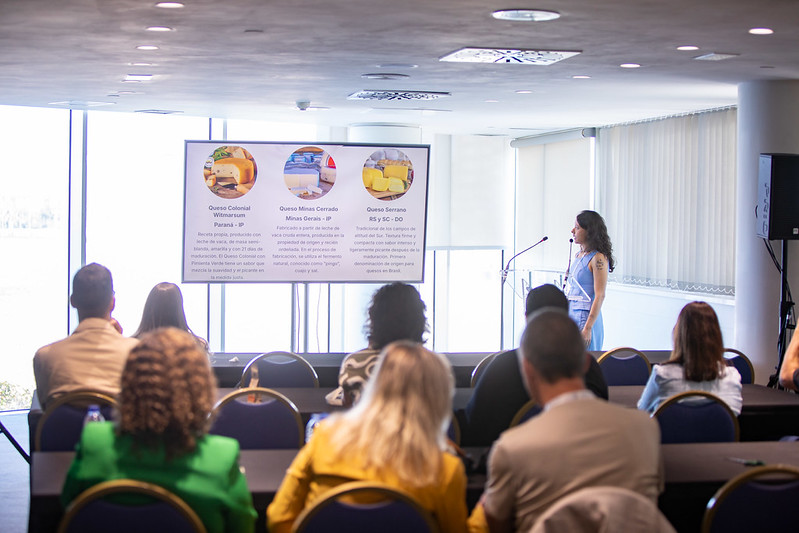
The external projection of the Canary Islands model is another of its strong points. Cooperation with archipelagos such as the Azores and Madeira, as well as the exchange of knowledge with Latin America, especially Brazil, allows for the construction of an Atlantic vision of wine tourism, based on the fragility of the territory, local identity and shared innovation.
A future that is being cultivated today
Agro-enotourism offers a real opportunity to conserve the landscape, generate profitability and attract talent to the primary sector. If the countryside is perceived as a space for the future and not as a vestige of the past, the Canary Islands will be able to move towards a more balanced, authentic and sustainable tourism model.
The challenge has been met: to turn wine, knowledge and territory into an experience with its own identity. And to do so, moreover, from the Canary Islands to the world.