The sector is seeking to transform visits to wineries into experiences linked to gastronomy, the local area and local culture, thereby enabling it to diversify its income and improve its marketing
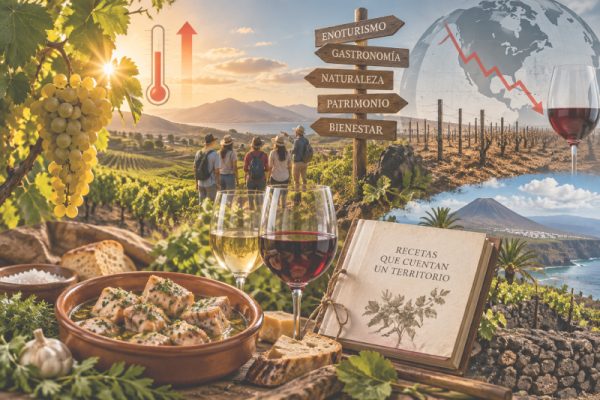
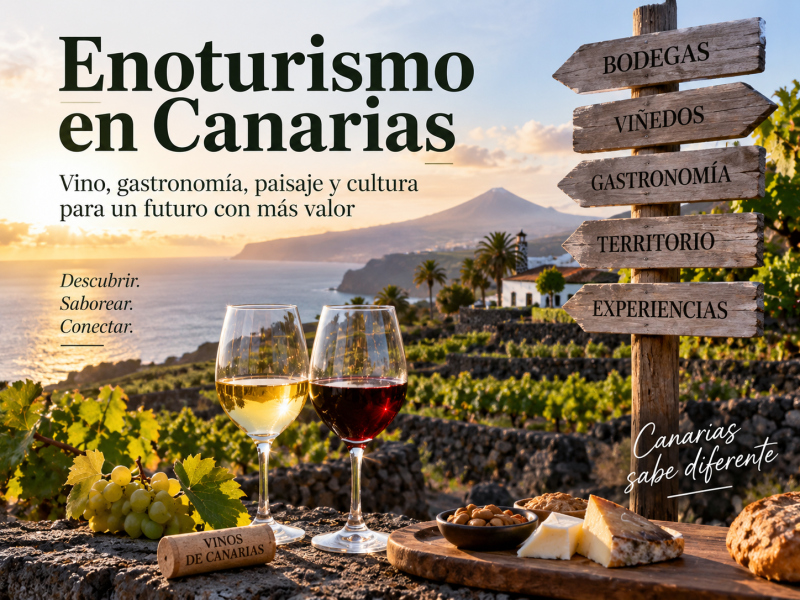
The future of Canarian wine is not solely determined by what’s inside the bottle. Wine tourism is becoming a strategic tool for wineries to diversify their activities, generate new revenue and forge a more direct relationship with the millions of visitors who come to the archipelago every year.
The Canary Islands Government has strengthened this area of work by focusing on forging closer links between the primary sector, tourism, gastronomy and the region, capitalising on wine-growing characteristics that are hard to find in other destinations.
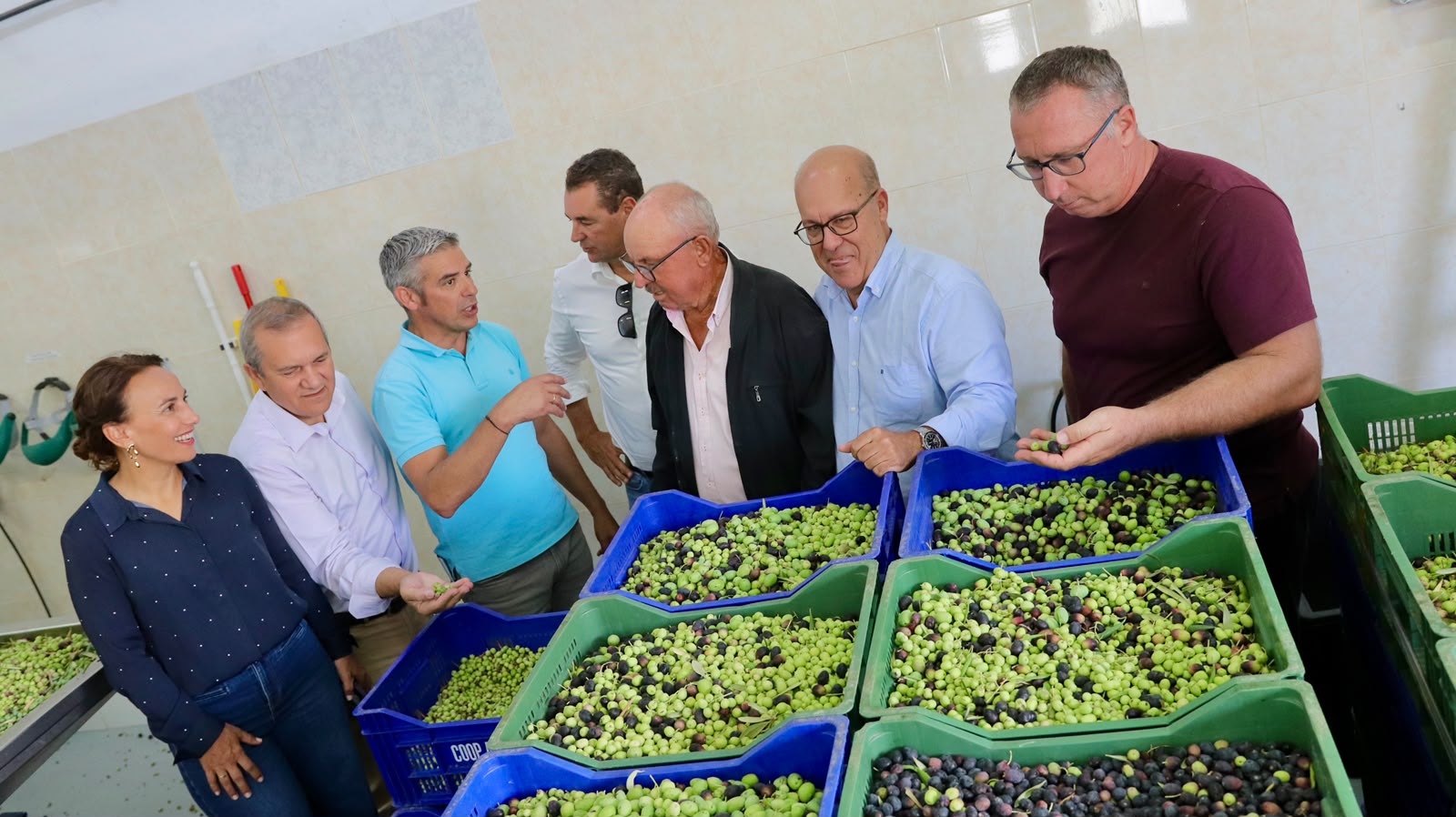
The strategy was recently unveiled during a visit to Bodegas El Lomo in Tegueste, a project that has been gradually integrating gastronomy, accommodation and various wine-related experiences into its winemaking activities.
From selling a bottle to offering an experience
This approach involves a change of perspective.
A visit to a winery allows consumers to discover the vineyard, the local grape varieties and the people responsible for making the wine. The product is thus no longer seen merely as a bottle, but comes to be associated with a landscape, a story and an experience lived out in the region.
Bodegas El Lomo epitomises this evolution. Founded in the late 1980s as a family business, it has gradually introduced new wine styles, signature wines, limited editions and vermouths, whilst also championing indigenous grape varieties and practices linked to regenerative agriculture. Since 2017, it has also strengthened its focus on gastronomy and wine tourism.
The strategy is also taking hold on other islands. On 7 September, the Canary Islands Government highlighted the model developed by Bodegas Conatvs in Fuerteventura, which was awarded the 2026 Canary Islands Tourism Award for Excellence in Tourism for an initiative that combines wine-making, sustainability, the landscape and tourist experiences.
Buy wine in the Canary Islands and have it delivered to your home
One of the traditional obstacles to wine tourism in the Canary Islands arises after the visit: ensuring that tourists can continue to buy the wines they have discovered once they return home.
In an attempt to resolve this, Bodegas El Lomo is taking part in a pilot scheme resulting from the collaboration between GMR Canarias and the Canary Islands Wine Tourism Cluster. The scheme enables visitors to purchase wine whilst visiting the winery and subsequently have it delivered to their home, in an effort to overcome some of the logistical and tax-related difficulties associated with the islands’ insularity.
The initiative is particularly significant because it transforms a one-off tourist visit into a potential long-term business relationship.
A production that needs to generate greater value
The rise of wine tourism comes at a difficult time for the Canary Islands’ wine industry.
In 2025 , 3.52 million litres of PDO wine were produced on the islands, compared with 5.07 million in 2024 and 7.85 million in 2023. This represents a 30 per cent decrease on the previous year and a 55 per cent decrease compared with 2023.
The outlook for the 2026 grape harvest is more favourable following a wetter and milder winter, although challenges remain, such as drought in certain areas, generational succession and monitoring the phylloxera outbreak detected in Tenerife in 2025.
In this context, generating greater value from each bottle and diversifying sources of income takes on particular importance.
Wine, stars and the region
The Canary Islands also offer opportunities to develop initiatives that would be difficult to replicate in other regions.
One of these is wine and stargazing tourism, which combines a visit to a vineyard and a wine tasting with stargazing under skies renowned internationally for their quality.
The first Wine and Astronomy Tourism Conference, held in July, brought together wineries, experience providers, booking platforms, public authorities and scientific organisations to explore how to turn this combination of sky, wine and the local area into a professional and marketable tourism product.
Competing on the basis of uniqueness
Canarian wine is based on an obvious fact: its production capacity is small compared with that of the major Spanish and European wine-producing regions.
But that is precisely where one of its strengths may lie.
Volcanic vineyards, indigenous grape varieties, ungrafted vines, traditional training systems, unique landscapes, local cuisine and exceptional natural conditions provide more than enough reasons to create wine tourism experiences with a strong identity.
The challenge is to ensure that visitors to the Canary Islands not only discover the region’s wines whilst on holiday, but also remember the region through them and continue to seek them out when they return home.